The Sharp Edge of Excellence: Why the Knife is the Lifeblood of the Fish Industry
By. Fajar - 27 Feb 2026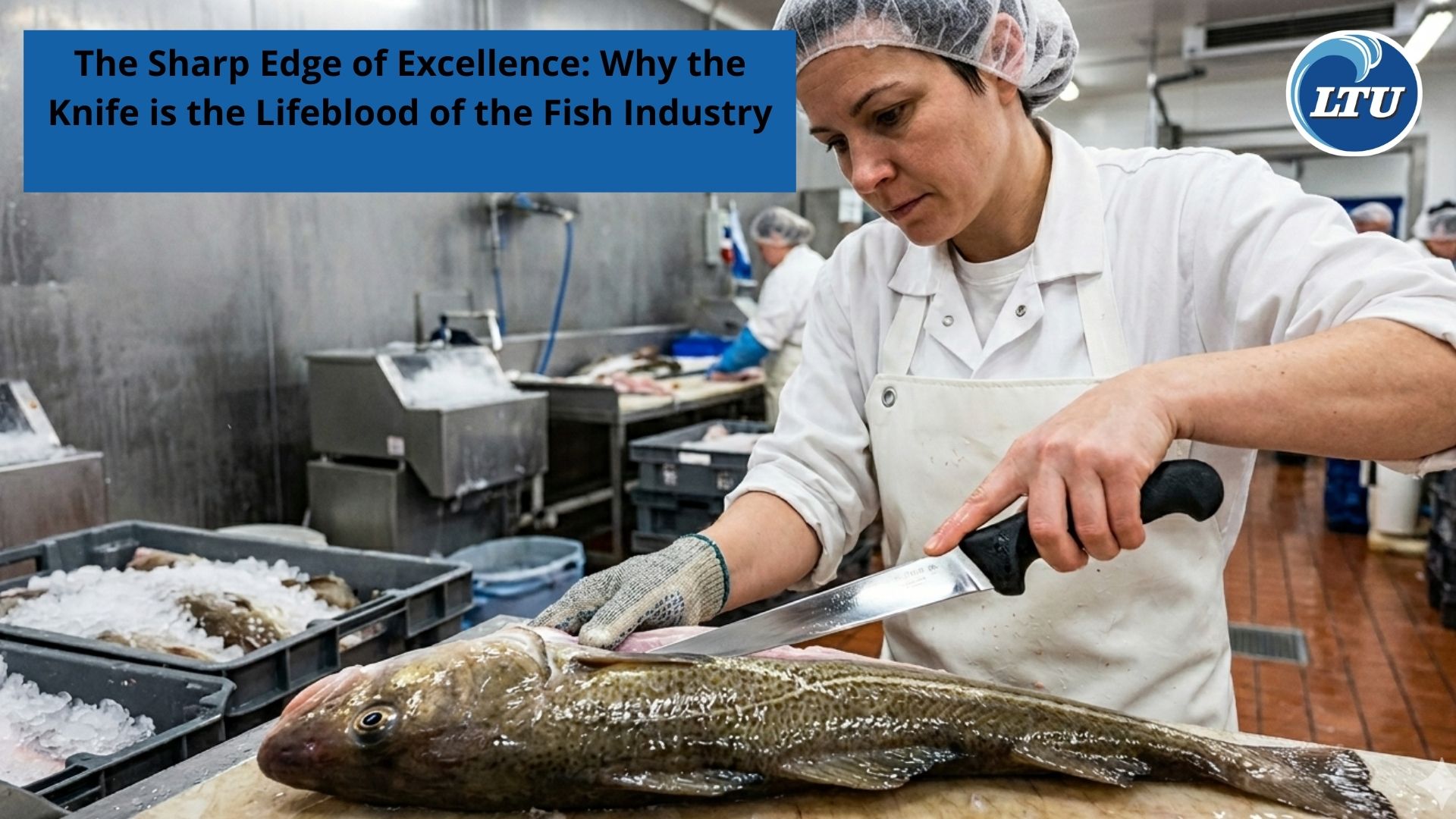
lauttimurutama.com In an era of rapid automation and high-tech processing plants, it is easy to overlook the most fundamental tool in the maritime culinary world: the knife. While massive machines can sort and scale fish by the thousands, the humble blade remains the primary bridge between a raw catch and a high-value product. In the fish industry, a knife is not just a utensil; it is a precision instrument that dictates yield, quality, and safety.
1. Precision and Yield Optimization
In the commercial fish industry, the difference between profit and loss is often measured in millimeters. This is where the importance of a specialized knife—and the skill of the person wielding it—becomes apparent.
- Maximum Extraction: A high-quality filleting knife allows a processor to follow the skeletal structure of the fish closely. Unlike a rigid machine, a flexible blade can maneuver around the ribcage, ensuring that every gram of usable protein is recovered.
- Waste Reduction: In the global seafood market, where species like Bluefin Tuna or Chilean Sea Bass command premium prices, even a 1% loss in yield due to a dull or improper blade can result in thousands of dollars in lost revenue over a single season.
2. Preserving the Integrity of the Product
Fish is one of the most delicate proteins on the planet. Its cellular structure is fragile, and it begins to degrade the moment it is harvested. The quality of the cut directly impacts the "shelf-life" and "mouthfeel" of the final product.
- Clean Cuts vs. Tearing: A sharp knife slices through the muscle fibers cleanly. A dull knife, conversely, "saws" through the meat, causing cellular bruising and tearing. These micro-tears release moisture and enzymes that accelerate spoilage and result in a mushy texture.
- Aesthetics in the Sashimi Market: For sectors like the Japanese sushi and sashimi market, the knife is everything. The Yanagiba (a long, single-beveled blade) is designed to create a mirror-like surface on a slice of fish. This smooth surface doesn't just look beautiful; it prevents oxygen from penetrating the meat too quickly, preserving the flavor and color.
3. Versatility Across Species
The "fish industry" is not a monolith. Processing a 200kg Swordfish requires a vastly different approach than deboning a delicate Sardine. The diversity of knives reflects the diversity of the ocean:
|
Knife Type |
Primary Function |
Industry Application |
|
Fillet Knife |
Thin, flexible blade for removing skin and bones. |
General processing and retail. |
|
Deba |
Heavy, sturdy blade for beheading and gutting. |
Heavy-duty processing, especially in Asia. |
|
Cimeter |
Long, curved blade for breaking down large fish. |
Wholesale butchery and steaks. |
|
Oyster Knife |
Short, thick blade for prying shells. |
Shellfish and aquaculture. |
This variety allows processors to adapt to the specific anatomy of each species, ensuring that the meat is treated with the appropriate level of force or finesse.
4. Safety and Ergonomics
It may seem counterintuitive, but a sharp knife is safer than a dull one. In a high-pressure processing environment, workers must make thousands of cuts per shift.
- Reduced Force: A sharp blade requires minimal pressure to slice. When a blade is dull, the worker must apply excessive force, increasing the risk of the knife slipping and causing a severe injury.
- Ergonomics: Modern industrial knives are designed with ergonomic handles to prevent Repetitive Strain Injuries (RSI) and Carpal Tunnel Syndrome. In an industry plagued by labor shortages, keeping skilled cutters healthy and injury-free is a top priority for management.
5. The Human Element in a Tech-Driven World
While "auto-filleting" machines exist, they are often restricted to specific sizes and species of fish. They lack the sensory feedback of a human hand. A skilled cutter can feel a parasite, an abnormality in the bone, or a change in flesh density that a machine might miss. The knife serves as an extension of the worker’s senses, providing a level of quality control that software has yet to perfect.
If youre interested in our Red / Scarlet Snapper Whole Round / Whole Gilled Gutted Scaled,Emperor Fillet Skinless,White Snapper Pearl Perch Whole Round / Whole Gilled Gutted Scaled please do not hesitate to contact us through email and/or Whatsapp

 Exports.jpg)