Managing Parasites in the Aquaculture Industry: Detection, Treatment, and Prevention
By. Fajar - 02 Mar 2026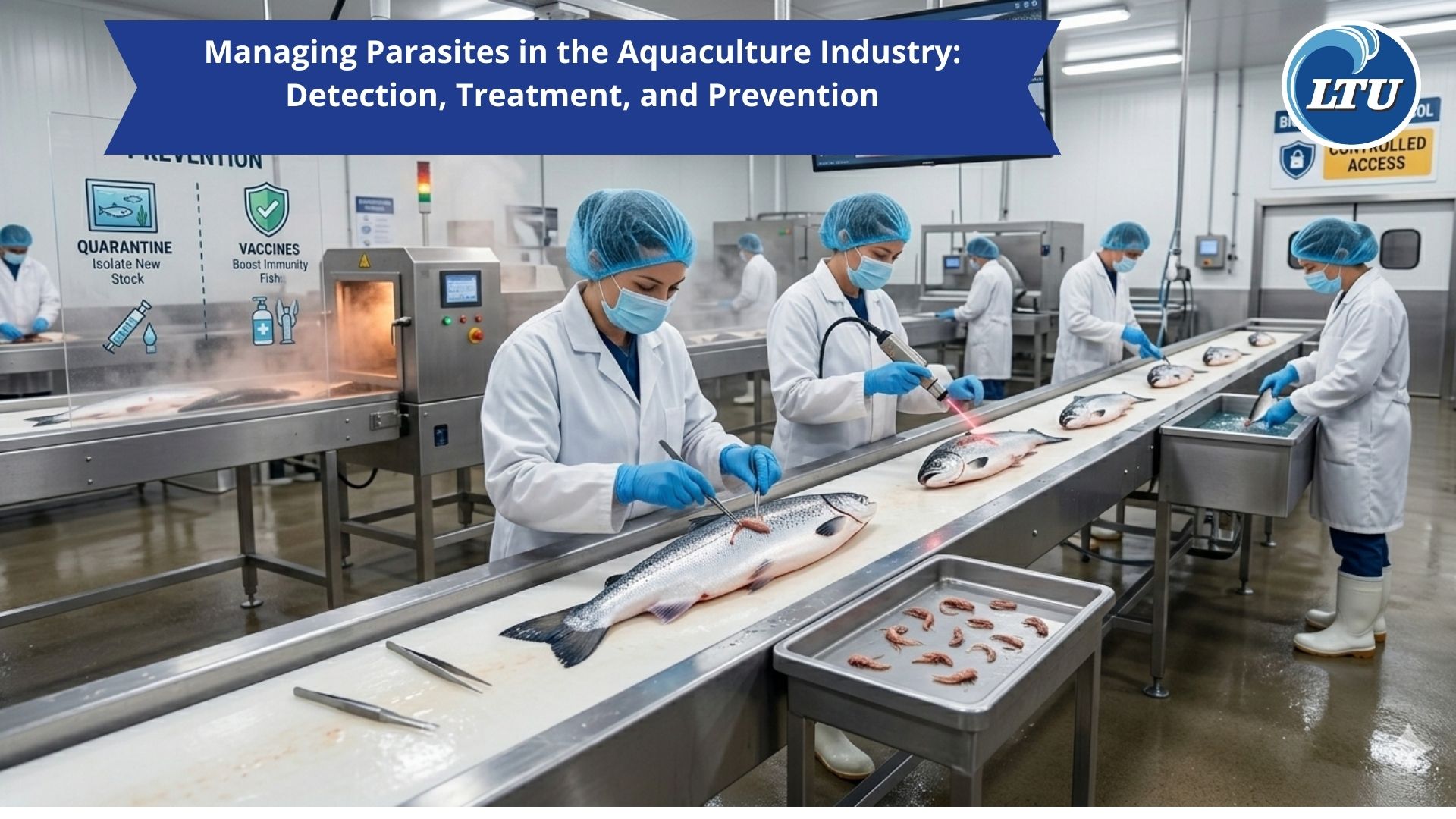
lauttimurutama.com The global aquaculture industry has transformed from a niche food source into a critical pillar of global food security. However, as stocking densities increase to meet rising demand, so does the risk of parasitic outbreaks. In an industrial setting, "removing" a parasite isn't as simple as using a pair of tweezers; it involves a sophisticated combination of chemical treatments, biological controls, and rigorous biosecurity protocols.
Managing parasites effectively is essential not only for fish welfare but also for the economic viability of the farm and the safety of the end consumer.
1. Detection: The First Line of Defense
Before any removal can take place, accurate identification is paramount. Industrial farmers monitor for behavioral cues and physical symptoms.
- Behavioral Indicators: Fish "flashing" (rubbing against nets or tanks), lethargy, or gasping at the surface for air.
- Physical Signs: Visible white spots (Ich), frayed fins, excess mucus production, or "sea lice" attached to the skin.
In modern industrial setups, detection has gone high-tech. Many farms now use underwater AI-driven cameras that can scan thousands of fish per minute, identifying sea lice or lesions with higher accuracy than the human eye. Once a parasite is confirmed via skin scrapes or gill biopsies under a microscope, the removal process begins.
2. Physical and Mechanical Removal Methods
In large-scale operations, manual removal is impossible. Instead, the industry utilizes specialized machinery.
- Hydrolic Delousing (Hydrolicer): Frequently used in salmon farming, this system uses low-pressure water jets to gently "wash" parasites off the fish as they swim through a tube. The water is then filtered to collect and destroy the parasites.
- Thermal Treatment (Thermolicer): This method exploits the parasite's sensitivity to temperature. Fish are briefly passed through water that is slightly warmer than their natural environment ($28\text{--}34$°C). The sudden temperature shift causes parasites like sea lice to detach and die, while the fish remain unharmed.
- Optical Lasers: One of the most futuristic methods involves automated underwater lasers. These units identify parasites on swimming fish and fire a precise pulse of light that destroys the parasite instantly without touching the fish.
3. Biological Controls: Nature’s Cleaners
The industry is increasingly moving away from chemicals in favor of "cleaner fish." Species such as Wrasse or Lumpfish are co-habitated with the primary stock (like Salmon). These cleaner fish naturally forage on the parasites attached to the larger fish. This creates a symbiotic environment that reduces the need for human intervention and keeps parasite loads below the economic threshold.
4. Chemical and Medicinal Treatments
When an outbreak is severe, medicinal intervention is often necessary. These treatments are categorized by how they are administered:
|
Method |
Description |
Common Use Case |
|
Bath Treatments |
Fish are "bathed" in a controlled concentration of medicine (e.g., Hydrogen Peroxide) within a well-boat or a tarped pen. |
External parasites like sea lice or flukes. |
|
In-Feed Medication |
Medicine is coated onto the feed pellets. This is less stressful for the fish as they don't need to be handled. |
Internal parasites or systemic infections. |
|
Oral Intubation |
In high-value broodstock, medicine may be administered directly into the stomach. |
Rare; used for individual valuable specimens. |
5. Biosecurity and Prevention
5. Biosecurity and Prevention
The most efficient way to remove a parasite is to ensure it never enters the system. Industrial biosecurity involves:
- Water Filtration: Utilizing UV sterilization and ozone treatments to kill free-floating larvae in the intake water.
- Fallowing: Leaving pens empty for a set period between cycles to break the parasite's life cycle.
- Quarantine: Ensuring any new stock is "clean" before introducing them to the main population.
6. The Environmental and Ethical Consideration
Modern aquaculture is under intense scrutiny regarding the environmental impact of parasite treatments. Over-reliance on chemicals can lead to parasite resistance, making treatments less effective over time. Furthermore, the industry must ensure that "run-off" from chemical baths does not harm local wild populations. This is why mechanical and biological methods are currently the "gold standard" for sustainable growth.
If youre interested in our Red / Scarlet Snapper Whole Round / Whole Gilled Gutted Scaled,Emperor Fillet Skinless,White Snapper Pearl Perch Whole Round / Whole Gilled Gutted Scaled please do not hesitate to contact us through email and/or Whatsapp
 Exports.jpg)